APSE AND CIBORIUM
The apse of Santa Maria in Trastevere is structured in three sections. In the upper band we see the medieval mosaics, dating from 1140 - 1143 and are among the most significant of Rome.
On the triumphal arch are depicted the prophets Isaiah, Jeremiah, the Symbols of the Evangelists, The Seven Candlesticks of Revelation.
In the center of the apse Christ crowning the Virgin, on the right the saints: Peter, Pope Cornelius, Pope Julius I and Calepodius; left Pope Callistus I, San Lorenzo and Pope Innocent II.
At the top of the apse we see the “Empyrean pavilion with Our Lord crowning the hand of the Son.”
The upper band is closed by the mystic Lamb flanked by twelve sheep.
In the middle section there are the XIII century mosaics by Pietro Cavallini (1240 - 1330?), That with Jacopo Torriti, is the greatest Roman painter of the Middle Ages. Here Cavallini has created the largest and most famous cycle of mosaics depicting the Stories of the Virgin.
The importance of Cavallini, not only for aesthetic reasons, is due to the fact that he constitutes a radical departure from Byzantine art, to give life to an “Italian” style.
Inevitably this has involved and involves a polemical debate on birthright: the first Cavallini or Giotto? And why not Cimabue? It is certain that Giotto isn’t famous for the mosaics.
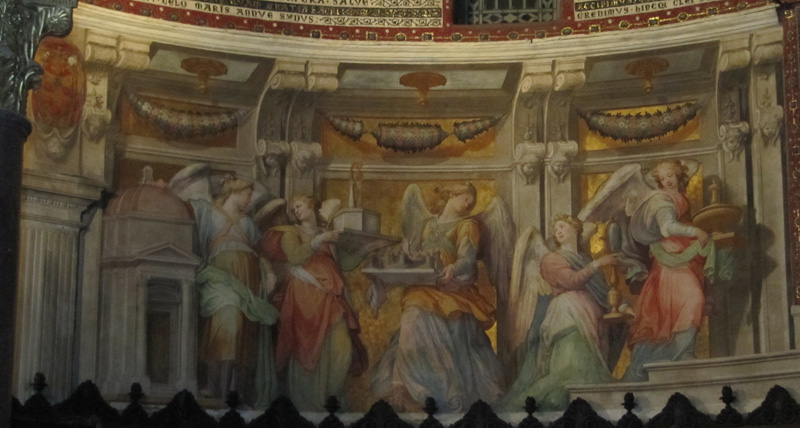
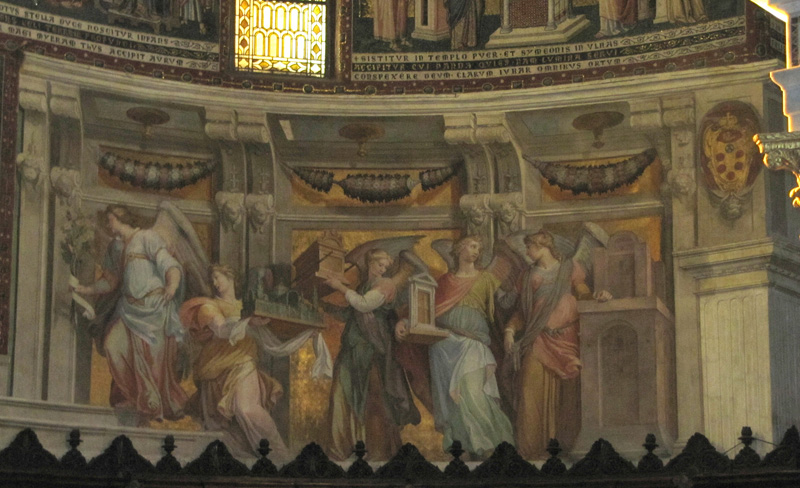
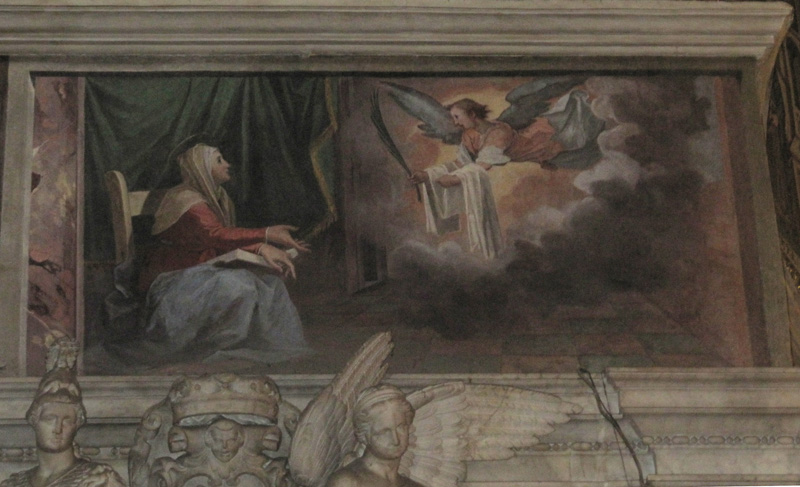
The lower band is painted by artists of the seventeenth century.
The ciborium was rebuilt by Virginio Vespignani between 1866 and 1867.
back |